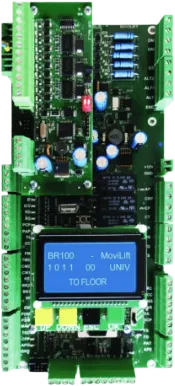
In a hydraulic installation the panel does not regulate a traction motor: it governs pump start-up and the emergency sequence. On a hydraulic lift that sequence is a controlled descent to the nearest floor level so the doors can be opened and passengers released without mechanical intervention, and it is the underlying functional difference against a traction controller.
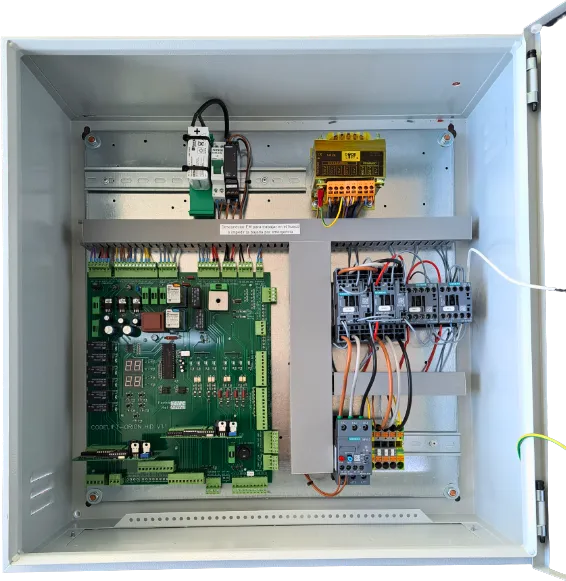
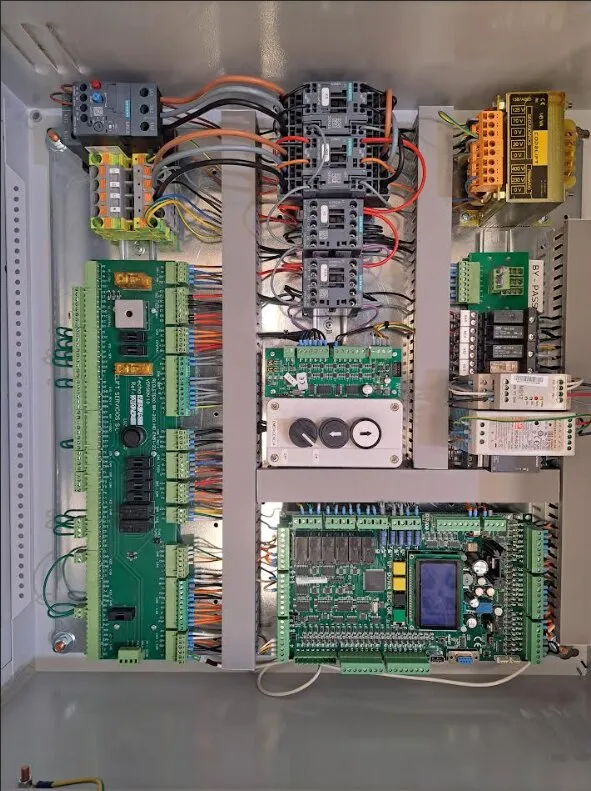
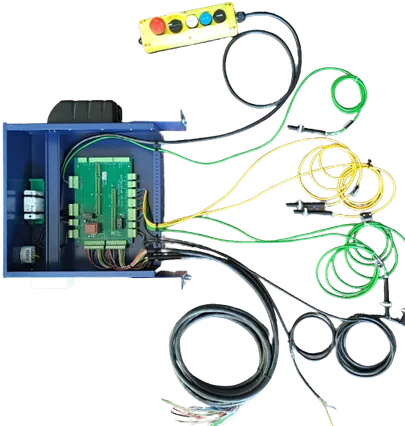
The second constraint is space. The power unit takes the machine room and leaves little margin for a conventional cabinet, especially in refurbishment. That is why the same controller exists in two formats: a cabinet, where there is room and everything should be grouped and accessible from the front, and a box, where the available space is already committed and what is wanted is a tighter enclosure that arrives pre-wired and does not force anyone to redo wiring in a space that is awkward to work in.
The third is thermal and duty-related. A hydraulic power unit works with high-draw pump starts and longer gaps between trips than a traction elevator in an office building, and that shapes decisions about protection devices and controller timings. Parameters and times are adjustable so the unit matches the building's real traffic rather than sitting on factory values.
In the ORIÓN architecture the hydraulic version keeps the 2-wire RS-485 serial link between panel and car, the IP22 steel cabinet, positioning with SCHMERSAL magnets and magnetic detectors, and GERVALL limit switches as safety contacts: the drive changes, the build and safety criteria do not.
All of these are configured against the installation: number of floors, the characteristics of the power unit already fitted, door type and applicable standards determine the build. There is no stock reference to order blind, which is exactly why the power unit's data sheet is the first thing we ask for when quoting.