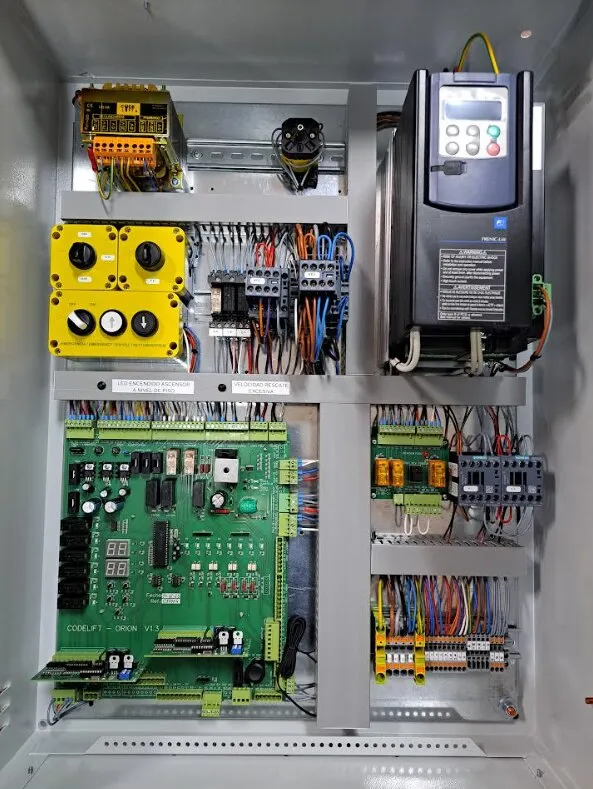
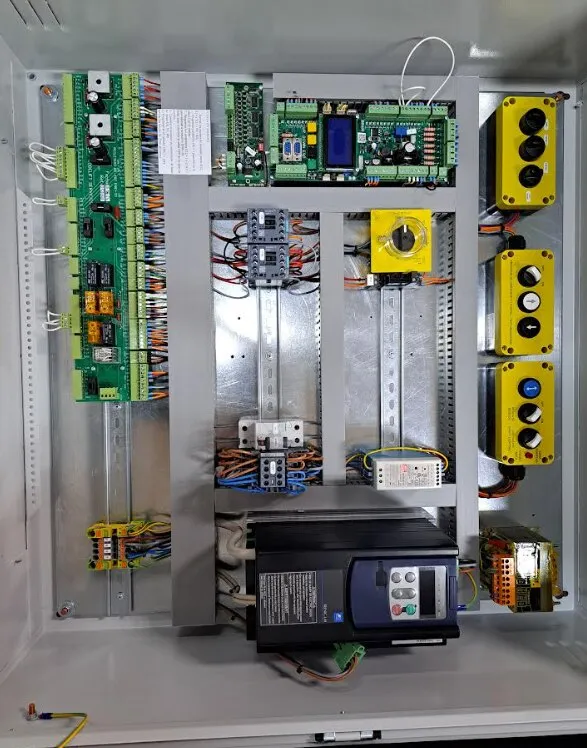
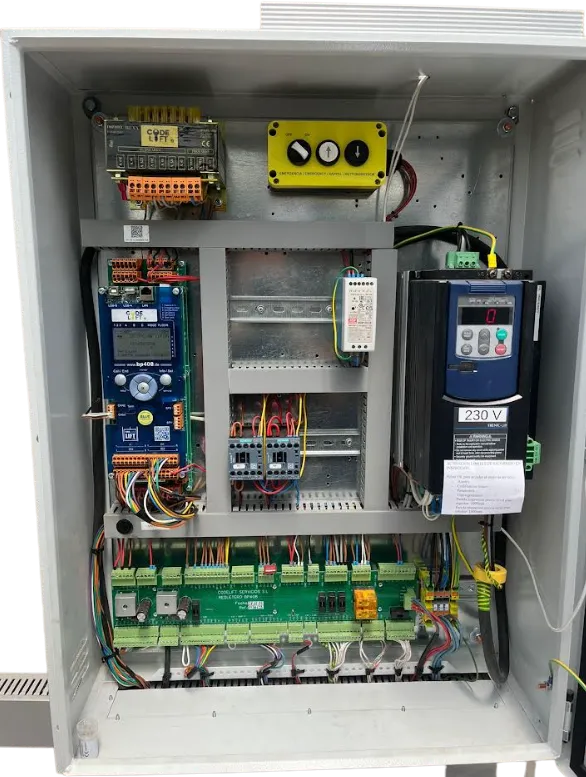
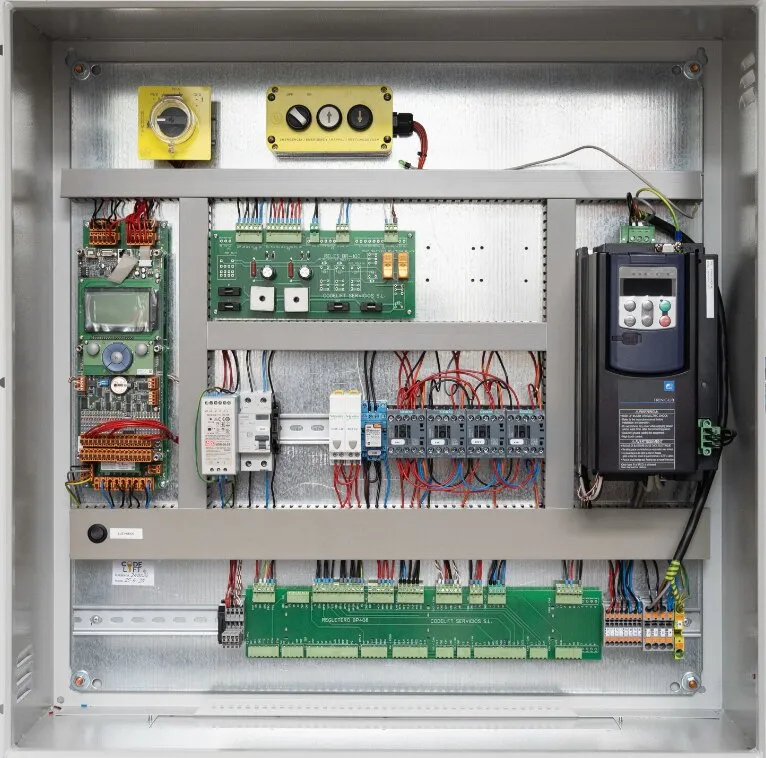
Where the building keeps its plant room there is no reason to push electronics into the shaft. The cabinet groups protections, control and power inside one enclosure, accessible standing up for inspection and diagnostics, and leaves the shaft clear. For a maintenance firm that means one place in the building to go to, with room to work and the panel in plain sight.
The second advantage of a machine room is slack. There is space to leave wiring margin and room to expand: CANopen input and output modules for extra signals, a car board for calls and relays, and space for the inverter and protections without compromising ventilation. That slack is what turns a future replacement into a job of hours rather than a redesign.
The type covers two distinct scenarios. In new build with a machine room you start from scratch and the cabinet is sized against the project. In controller replacement on an existing installation — the more frequent case — the constraint is what is already there: machine, door operator, landing door type and harness routing. The panel is built and wired at the plant against that data, and on site it is connected.
The reference protection rating in a steel cabinet is IP22, with indicators specified per project — arrows, in-use, door open, call registration, binary position display and a floor-level indicator on the panel itself — a fully wired inspection box, emergency light and switched shaft lighting. Positioning is solved with SCHMERSAL magnets and magnetic detectors, and GERVALL limit switches act as safety contacts.
Everything leaves the plant pre-wired and connectorised with WAGO, harnesses labelled one by one, so site work comes down to connecting and verifying. In an occupied building, where every day the lift is down is a neighbourly problem and not just a scheduling one, that split between plant and site is the part of the service people actually notice.